
After thick-skin rhinoplasty, swelling and firmness can make the nasal tip look different from what you expected. Thick skin and soft tissue may take longer to settle, but recovery is individual: the operation, previous surgery, health and the body’s healing response all matter. Follow the instructions from the surgeon who treated you.
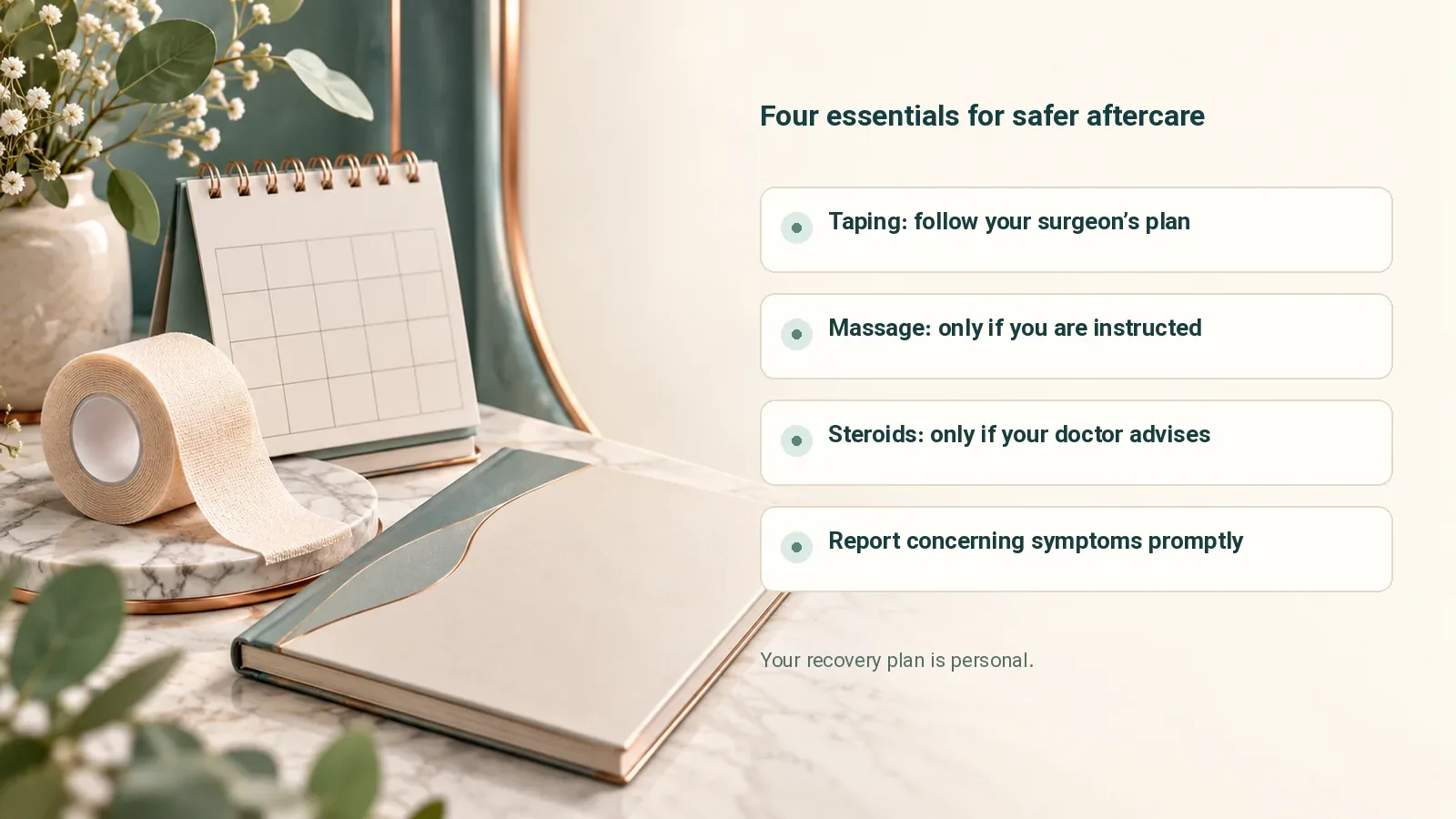
Tape, massage and steroid injections are not compulsory steps for every patient. Your surgical team should tell you whether any is suitable and how to recognise a problem. Contact them when advice is unclear instead of copying another person’s routine.
Ask the clinic about your recovery plan on WhatsApp.
Fill out the consultation form or send a message on WhatsApp so we can determine the right path for your surgery or facial rejuvenation.
Request ConsultationWhy can swelling last longer with thick skin?
Thick skin and its soft-tissue envelope may be less elastic and have a tendency towards prolonged swelling and scar tissue. The tip often changes more slowly than the bridge. This does not prove that an operation has failed; equally, a new or worsening symptom should not be dismissed as routine swelling.
Early swelling tends to improve over weeks, while subtle contour refinement often continues for a year and sometimes longer. No calendar predicts the outcome for one person. Keep your review appointments and ask whether your progress is consistent with your particular procedure. Compare photos only as your team recommends, rather than checking your nose repeatedly every day.
Nasal taping after thick-skin rhinoplasty
Your surgeon may recommend taping to help manage swelling. A small randomised study found benefits in some measurements, including in participants with thicker skin; it does not establish one universal duration or make taping mandatory. The time to start, type of tape, pressure and frequency of changes depend on your plan.
Ask a member of your surgical team to demonstrate application and removal. Do not remove or alter an initial cast or splint yourself. Tighter tape is not automatically better. Contact the clinic if tape causes marked itching, a rash, blistering or broken skin, or if you do not know how to change it safely. Do not extend taping just because another patient used it for longer.
Massage: is it necessary?
Massage is not needed for everyone. A surgeon may teach it for a particular reason after examining you. The area, pressure, starting time and frequency should be specified for your operation. Do not squeeze the tip or copy techniques from social media to change the shape or force swelling down.
Before starting, ask whether massage is actually indicated, exactly where to touch, how gently, when to stop and whom to call if it hurts. If no one has taught you, leave the nose alone and ask at your review.
Steroid injections: who needs them?
A clinician may consider a corticosteroid injection for selected patients after examining persistent swelling or tissue changes. Thick skin alone does not mean that everyone needs an injection. A small study examined triamcinolone in patients with thick skin, but it cannot establish a treatment schedule or dosage for an individual.
Inappropriate injections can cause skin thinning and other tissue changes. The decision, timing and administration belong to a qualified clinician. Do not start steroid tablets, injections or creams to reduce swelling without medical advice. Ask what the proposed treatment is intended to address, its risks, alternatives and how the response will be followed.
Sleep, diet, skin care and activity
Rest with your head raised if your team recommends it, and protect the nose from pressure. Keep the splint dry if instructed. Eat comfortably and drink enough fluids unless your own clinician has advised otherwise. Ask before taking supplements, herbal remedies or over-the-counter pain medicines; familiar products are not automatically appropriate after surgery.
Once the team allows washing, use the method they teach. Do not squeeze spots or scrub oily skin over a healing nose. Ask when cleansers, acne products, makeup, sunscreen and glasses can be used. In the first weeks, avoid impacts and follow the team’s schedule for work, lifting and exercise. NHS guidance notes that some people need up to two weeks away from work and that strenuous activity may be delayed around four to six weeks; your surgeon’s instructions determine your own timing.
Contact the clinic if you are unsure about taping or follow-up.
When should you seek urgent help?
Contact your surgical team promptly for fever, increasing redness, warmth, discharge, worsening pain or swelling, continuous clear watery nasal drainage, persistent bleeding, swelling around an eye or changes in vision. Heavy bleeding that continues, severe breathing difficulty, chest pain or changes in vision require urgent local emergency care. Do not wait for a scheduled review if symptoms are escalating.
Keep the clinic’s daytime and out-of-hours numbers and know the emergency route at home or while travelling. Take photographs only if the team requests them; an online image cannot rule out a complication.
For the broader stages of recovery, read the week-by-week rhinoplasty recovery timeline and clinic information.
To understand the features of thick skin and realistic expectations, read the broad and thick-skinned nose guide.
Frequently asked questions
How long does swelling last after thick-skin rhinoplasty?
Early swelling usually improves over weeks; refinement can continue for a year or longer. Your individual course depends on the operation and healing.
How long should I tape my nose?
There is no schedule for everyone. Use tape only for the duration and in the way advised by your surgeon.
Does tighter taping reduce swelling faster?
More pressure is not necessarily helpful and can irritate the skin. Ask the team to show you the correct technique.
When should I start massage?
Only if your surgeon recommends it and teaches you when and how to do it.
Does every thick-skinned nose need steroid injections?
No. A clinician decides after assessment whether an injection is appropriate, and explains its potential benefits and risks.
Does a swollen tip mean the operation failed?
No. Tip swelling can persist during healing, especially with thicker skin. Attend reviews, and report sudden or worsening changes.
Summary
Protect the nose, follow the plan provided by your surgical team and allow time for gradual healing. Tape, massage and steroid treatment require individual advice. If symptoms concern you, seek assessment rather than treating yourself.