
Rhinoplasty in Turkey for Iranians begins with a conversation, but safe planning also includes an in-person assessment, a flexible travel schedule and a practical follow-up plan after returning home. This guide covers the questions to ask before booking flights or paying a deposit.
An online discussion and photographs help organise the first conversation. They do not confirm suitability for surgery, guarantee a procedure or replace a complete medical assessment. The surgeon’s individual advice should guide your decisions.
Contact the clinic on WhatsApp to request an initial consultation.
Fill out the consultation form or send a message on WhatsApp so we can determine the right path for your surgery or facial rejuvenation.
Request ConsultationWhy consider Istanbul?
Istanbul offers air connections and a range of medical services that may be convenient for people travelling from Iran or elsewhere. Choosing a city does not replace checking a surgeon’s credentials, the medical facility, anaesthesia arrangements, a written estimate and the plan for complications and follow-up. Results shown for another patient cannot guarantee your result.
Ask who will operate, where the surgery is performed, how an in-person examination is arranged and who is responsible for follow-up. Allow time to understand risks, alternatives and the possibility that surgery may not be suitable. Do not make a rushed decision because travel dates or a discount are being promoted.
Communication in Persian
Discussing medical history and expectations in a language you understand can make questions easier. The clinic’s website describes consultation and follow-up for Persian-speaking patients. Confirm who will speak with you before surgery, on the day and during follow-up, and ask whether an interpreter is needed or provided.
Good communication includes informed consent: ask for an explanation of the plan, limitations, risks, anaesthesia and aftercare in a form you can understand. Never assume a service is included without written confirmation.
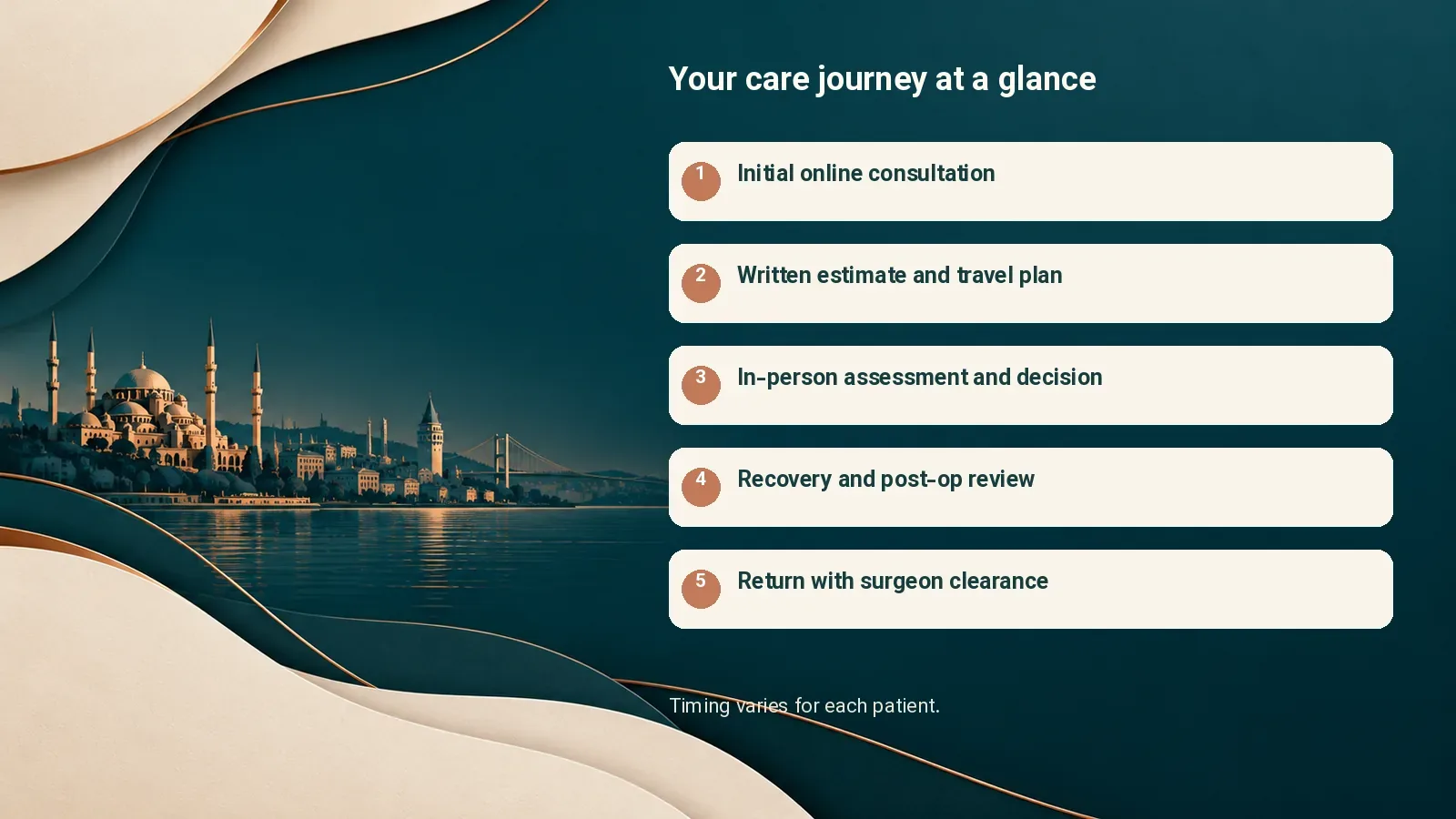
Step 1: online consultation and records
Explain your main concerns, breathing difficulties, previous nasal surgery or injury, expectations and health history. Prepare a list of medicines, supplements, allergies, medical conditions and nicotine use. If requested, send relevant operative reports or other records through the secure route provided by the team.
If photographs are requested, use the team’s instructions for angles and lighting and avoid filters or retouching. A photo or short call cannot establish final candidacy or assess every physical finding. An examination can change the plan, require further tests, postpone surgery or show that an operation is unsuitable. The online consultation guide for international patients explains how to prepare and the limits of remote assessment.
Step 2: written estimate and travel planning
Ask for a dated written estimate that explains the surgeon’s fee, anaesthesia, hospital, tests, medicines and follow-up visits. Ask separately whether accommodation, transfers, translation and a companion are offered or charged; those services should never be assumed to be included. Clarify payment currency, deposit, cancellation, extra nights and changes after examination.
Allow time before the proposed operation for examination and any requested tests. Consider flexible flights and a contingency budget. A travel booking does not guarantee that surgery will proceed on the planned date. Read your travel insurance terms and ask specifically whether elective-surgery complications, delayed return and emergency transport are covered.
Step 3: arrival, examination and surgery day
After arrival, an in-person examination and medical or anaesthetic evaluation take place according to the team’s plan. Discuss the intended change, breathing, expected recovery, alternatives and risks. The clinician may request further tests, change the proposed date or advise against surgery.
Follow the team’s individual instructions on food, drink, medicines, accompaniment and arrival at the facility. Do not stop or start regular medication on the basis of an online article. Before discharge, know who is accompanying you, how to reach the surgical team and where to seek urgent local care.
Ask the clinic about your assessment, stay and follow-up plan.
First review and splint removal
An external splint or dressings may be used. Removal is sometimes planned around one week but the surgeon chooses the time after assessing healing; day seven is not guaranteed. Obtain clear instructions on prescribed medicines, sleeping, washing, protecting the nose and symptoms to report. Never remove a splint yourself unless specifically instructed.
The week-by-week rhinoplasty recovery guide describes common stages; your own instructions may differ.
How long should you stay, and when can you fly?
Some itineraries begin with an estimate of seven to ten days after surgery, but that is not enough for everyone. Procedure, reviews, medical history, route and complications can require a longer stay. Ask the surgeon for a personalised minimum and leave room for changes before buying a ticket.
Public advice is not identical: the NHS discusses avoiding flights for seven to ten days after facial cosmetic procedures, while Cambridge University Hospitals advises avoiding flying for two weeks after septorhinoplasty. Neither figure clears an individual to fly. Ask your surgeon about your own timing, clot risks and what to do during a long journey.
Visa and flight checks for Iranian travellers
Türkiye’s Ministry of Foreign Affairs states that Iranian ordinary and official passport holders are exempt from a visa for travel up to 90 days. Entry conditions, allowed stay, passport validity and rules related to the purpose of travel can change or depend on individual circumstances. Verify current requirements with Turkish authorities, the appropriate consulate and your airline before booking. If you travel using another passport or residence status, check the rules for those documents separately.
Follow-up after returning home
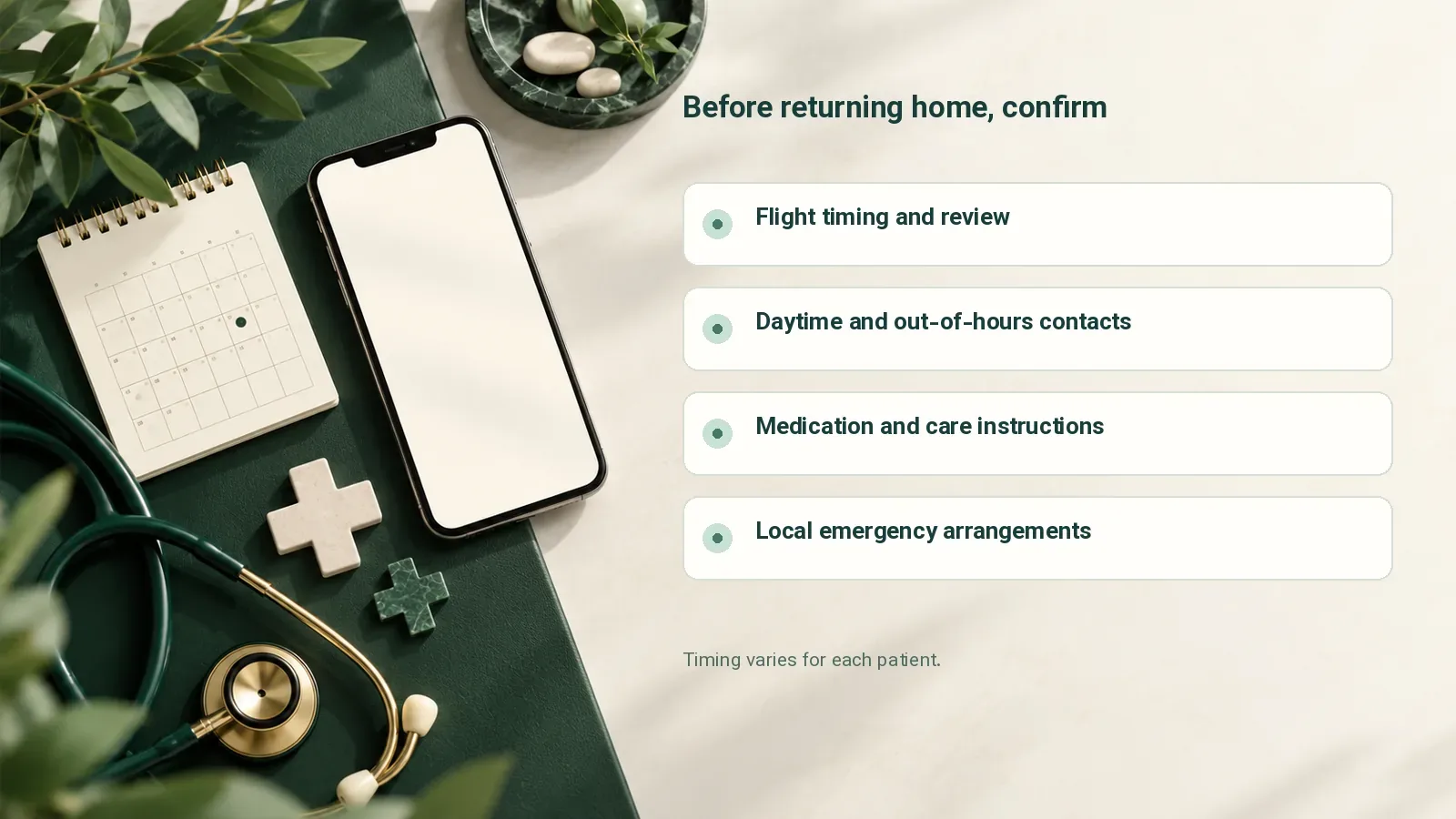
Before leaving Istanbul, obtain a treatment summary, medication instructions, review schedule and contact details for daytime and out-of-hours concerns. Ask when photos or calls are expected, who responds and what happens if an in-person examination is needed. Remote follow-up does not replace urgent local assessment.
For severe or persistent bleeding, severe breathing difficulty, chest pain or changes in vision, seek local emergency care first and inform the surgical team when possible. Report fever, increasing redness, pain or swelling and unusual discharge promptly.
Learn more about the clinic’s rhinoplasty information.
Frequently asked questions
Can I have an online consultation before travelling?
The clinic offers an initial remote contact, but a definitive decision can require in-person examination and medical review.
Do Iranian travellers need a visa for Turkey?
Türkiye’s foreign ministry lists visa exemption up to 90 days for ordinary and official Iranian passport holders. Check current entry rules and your own documents before travel.
Is a seven-day stay enough for everyone?
No. The operation, reviews, health and flight plans may require a longer stay. Ask your surgeon before booking.
Is the splint always removed on day seven?
No. Removal may be planned around one week, but the exact time is decided by the surgical team.
Are hotel and transfers included in the surgical price?
Do not assume this. Request an itemised written estimate showing included and separate services.
How will follow-up work after I return?
Confirm the contact person, timing, remote review and local emergency arrangements before leaving.
Summary
Start with a remote discussion and written estimate, then plan for in-person assessment, sufficient recovery time, a flexible return and follow-up at home. The surgeon’s individual clearance takes priority over any general travel timetable.