

An online consultation can be a practical first step for someone who lives in another city or country and is considering facial aesthetic surgery. It gives the patient and the care team a chance to identify the main concern, discuss broad goals, review relevant background information and clarify what may need to happen before travel. It can also make the next step less vague: perhaps gathering records, arranging an in-person assessment, or asking more specific questions before any decision is made.
It is not, however, a diagnosis, a final surgical recommendation or a confirmation that a person is definitely a candidate. A face cannot be fully assessed through a photograph, a short video call or a message thread. An in-person examination, a complete health review and an informed-consent discussion remain separate and necessary parts of surgical decision-making. A proposed plan may change, become more limited, be postponed or be considered unsuitable after that fuller assessment.
A virtual appointment can help organise the conversation. The patient can explain what they would like to discuss, the team can ask about prior procedures and relevant health information, and both sides can identify the questions that matter before a trip is planned. The team may explain what documents or photographs are useful, what the usual in-person pathway looks like and which practical issues still need confirmation.
Fill out the consultation form or send a message on WhatsApp so we can determine the right path for your surgery or facial rejuvenation.
Request ConsultationRemote discussion has important limits. It cannot reliably replace examining skin quality and tissue movement, feeling structures, evaluating dynamic symmetry, reviewing the full eye area or airway concerns, or determining anaesthetic and safety needs. It also cannot turn one filtered selfie into a final procedure choice. A useful consultation makes those limits visible rather than hiding them behind a fast promise.
The purpose is to prepare for a sound next step, not to pressure someone into booking. If an answer depends on an examination, a test, another clinician’s opinion or additional records, the appropriate answer is that it still needs to be assessed. That is not a failure of the consultation; it is a safer way to preserve realistic expectations.
Write a short description of the concern you want to discuss. Be specific about the area that matters to you, when you first noticed it and what you hope to understand. It is more useful to say, “I am concerned about heaviness around my upper eyelids,” than simply, “I want a better face.” If you have seen another person’s result online, use it only to describe a preference or a question. No other person’s before-and-after photograph can predict your anatomy, healing or outcome.
Prepare the health information requested by the team. This may include relevant conditions, important allergies, prescribed and non-prescribed medicines, supplements, nicotine use, previous facial or nasal surgery and recent treatments. Do not guess at a medicine name or dose; check the label, prescription or the clinician who prescribed it. Never start, stop or alter medicines, supplements, nicotine products or activity based on a general article or a chat message.
Prior operative reports, medical summaries, imaging or instructions from previous clinicians can sometimes be useful when they are relevant to the concern. Send material only through the care team’s approved route. A concise, organised set of requested documents is usually more helpful than a large collection of unrelated files and scattered messages.
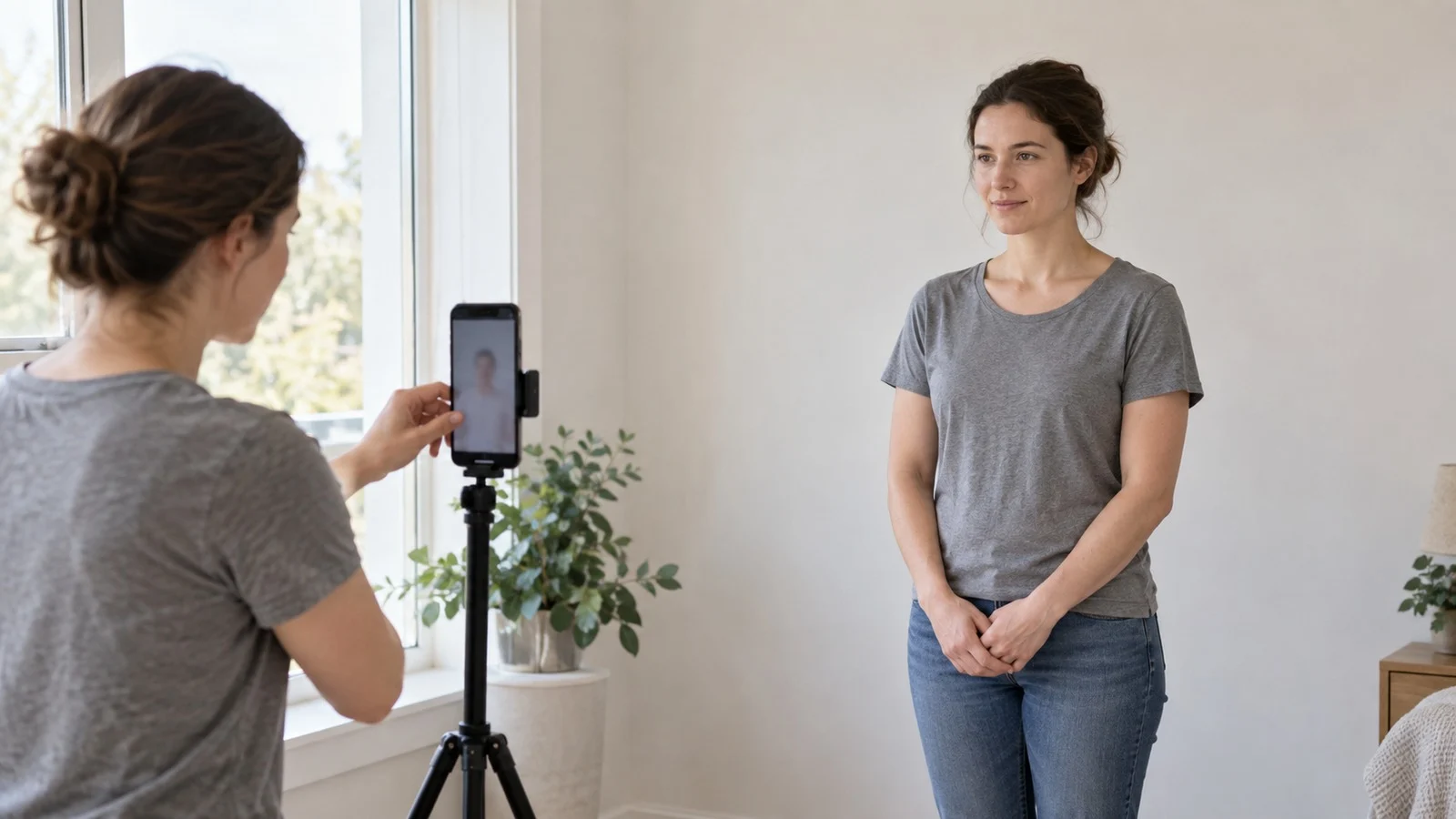
Photographs can support an initial conversation only when they are as honest as possible. Avoid beauty filters, retouching, portrait effects, social-media editing, dramatic side-lighting, heavy makeup or an angle chosen to reshape the face. Even lighting and a plain background usually make a starting discussion clearer. Follow the team’s instructions about which views, distance and method of delivery are needed.
Front, profile and three-quarter views without tilting the head are often requested, but they are not a universal diagnostic rule. Hair, glasses, masks or anything that covers the area being discussed should be handled according to the team’s instructions. If you have a prior operation, pain, eye irritation, breathing concern, recent change or another relevant symptom, describe it in writing as well; a photograph alone may not communicate it.
Even well-made photographs have limits. Lens choice, camera distance, lighting, facial expression and connection quality can change what appears on screen. They are a way to begin a conversation, not a way to issue a medical conclusion or select a final technique.

An online clinician may be able to explain general options, terminology and the usual sequence of assessment. But the exact quality and elasticity of skin, deeper structures, scars, functional concerns, dynamic facial movement, eyelid position, nasal function and the interaction of several facial areas cannot always be established remotely. A feature that looks prominent in a photograph may be less relevant on examination, and a clinically important detail may not be visible in an image at all.
Remote review also cannot replace a proper safety discussion. Health conditions, medicines, clotting history, nicotine exposure, previous surgery, allergies and changes in health can affect timing and whether a particular plan is appropriate. Only the treating team can tell you which details require more information, a local medical review or an in-person examination.
When a question cannot be answered yet, a careful “we need to assess that in person” is better than an assumption. It gives an international patient a stronger basis for keeping work, travel and companion arrangements flexible.
An online consultation works best when you know what you want to clarify. If you are considering a first rhinoplasty, read Who Is a Good Candidate for Primary Rhinoplasty? before the call and bring focused questions about health history, realistic goals and the in-person assessment.
If your concern is around the eyes, Upper vs Lower Blepharoplasty: What Does Each Address? explains why a still image alone cannot settle a treatment decision. For facial rejuvenation questions, Facelift vs Mini Facelift: What Is the Difference? can help you distinguish a procedure label from the areas and tissues that need assessment. For the neck and jawline, Neck Lift vs Submental Liposuction: What Does Each Treat? is a useful starting point.
These internal resources are educational. They help patients understand terms and prepare questions; they do not recommend a procedure for an individual or replace a consultation.

Facial images, medical records and contact details are personal information. Before sending them, ask which channel or platform the care team approves, who will have access, why the information is being collected and how you can raise privacy questions. Do not assume that every convenient messaging app is appropriate for every record.
Avoid posting clinical photographs in public groups or sending them to unidentified people. If educational or promotional use of an image is ever discussed, treat it separately from clinical care. Ask what consent would cover, whether you can decline and whether your decision affects your ability to receive an explanation about your care. A patient should be able to ask those questions without pressure.
After the appointment, the team may request additional records through a specified channel, suggest an in-person appointment or recommend that certain questions be addressed with a local clinician before travel. They may explain that surgical scope, staging, testing, recovery commitments and suitability can only be discussed with greater precision after seeing the patient in person.
An encouraging initial conversation should not be treated as a reason to lock in a non-refundable trip, inflexible leave from work or an unsuitable travel companion. International patients should plan time for the examination, further discussion, decision-making and any required follow-up. If the plan changes after an examination, that may reflect information that only an in-person assessment could reveal.

Before booking flights or accommodation, ask about the expected in-person assessment date, whether a companion may be needed, approximate time in the treatment location, activity restrictions, follow-up visits and the proper way to contact the team. The length of stay and timing of travel vary with the individual and the actual procedure. A general number of days on the internet cannot replace individual instructions.
If you do not share a language with the treatment team, ask early how communication and informed consent will be handled and which records are needed in which language. Also ask what route applies if you have a question or concerning symptom after returning home, including how to access local care when necessary. A good travel plan makes room for rest, follow-up, possible changes and access to support; it is not only an itinerary to the procedure.
For documents and pre-operative preparation, use the guide on {anchor}.
The wider international-patient journey is explained in the guide on {anchor}.
- What is the purpose of the online consultation in my case, and what must wait for an in-person examination?
- Which photographs, records and health details are genuinely needed, and how should I send them safely?
- Which medicines, supplements, allergies, conditions, nicotine exposure or prior procedures should I disclose?
- Should my travel dates remain flexible until after the examination?
- Who will explain the possible plan, limitations and risks at the in-person visit?
- How will informed consent and communication work in my language?
- What follow-up is expected while I am in the treatment location and after I return home?
- What contact route or local-care plan should I follow for a concerning symptom?
Does an online consultation confirm that I am a surgery candidate?
No. It can support an initial conversation and information gathering, but an in-person examination, full health review and safety assessment are needed before a final decision.
What photographs should I send?
Send only the photographs the care team requests, using even lighting and no filters or retouching. Their instructions about views, distance and the approved channel take priority.
Can I finalise all travel plans before the in-person examination?
It is wiser to keep plans flexible. The time needed for assessment, decision-making, care and follow-up depends on the individual and may change after the examination.
Will my photographs and records be private?
Ask the team which approved route is used, who can access the material, why it is used and how to raise privacy questions. Do not send records through public spaces or to unidentified people.
An online facial surgery consultation can give an international patient a structured way to explain concerns, organise information and plan the next step. Its value is in clearer communication and preparation, not remote diagnosis or a promise of a result. An in-person examination, full health review, informed consent and an individual plan are essential before a surgical decision. This article is educational and does not replace personal medical assessment, diagnosis or advice.
1. Telehealth.HHS.gov: For Patients
2. Telehealth.HHS.gov: Why Use Telehealth?
3. Health Resources and Services Administration: What Is Telehealth?
4. American Society of Plastic Surgeons: Navigating Plastic Surgery Consultations



[…] the plan, require further tests, postpone surgery or show that an operation is unsuitable. The online consultation guide for international patients explains how to prepare and the limits of remote […]