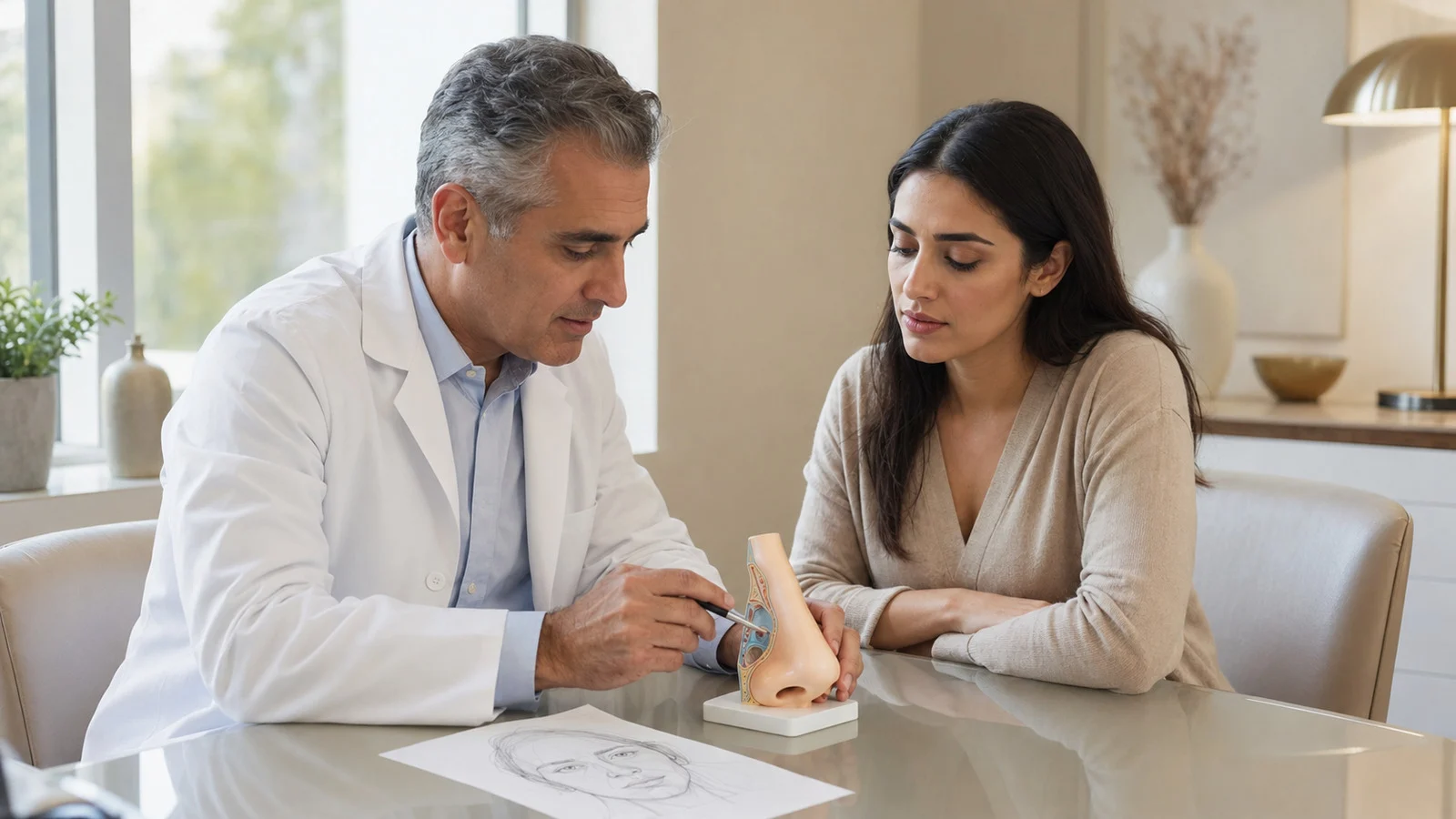
Primary rhinoplasty means nose surgery for someone who has not had nasal surgery before. Before a consultation, many people ask, “Am I a good candidate for rhinoplasty?” The responsible answer is that no one can be confirmed as a suitable candidate from age, a single feature, or photographs alone. Suitability follows a medical assessment and a careful discussion of health, nasal and facial structure, breathing, personal goals, and the real limits of surgery.
Rhinoplasty may be considered to address particular appearance concerns and, in some cases, to assess functional nasal concerns. It is not designed to completely change a person’s identity, solve unrelated problems, or guarantee the same result for every patient. A final treatment recommendation should be made only after an individual examination and medical assessment by a qualified surgeon.
What does a good primary rhinoplasty candidate mean?
“Good candidate” does not mean a perfect nose or a guaranteed outcome. During a consultation, the clinician considers whether surgery can be assessed safely, whether the requested change is compatible with the person’s anatomy, and whether the decision is informed and realistic.
Fill out the consultation form or send a message on WhatsApp so we can determine the right path for your surgery or facial rejuvenation.
Request ConsultationThe assessment commonly includes:
- sufficient facial and nasal development;
- general health and relevant medical history;
- breathing, septal concerns, skin quality, cartilage and nasal bones;
- smoking, vaping, nicotine exposure, medicines and supplements;
- a clear goal that respects overall facial balance;
- realistic understanding of recovery, swelling, scars and limitations; and
- the ability to follow preoperative and postoperative advice.
This is not a self-diagnosis checklist. Some factors can be managed or optimised, while others may change the timing or scope of the proposed plan.
Facial growth and the right time for assessment
Facial development matters because the nose is part of the balance of the whole face. In its consumer information, AAFPRS lists fully developed facial bones—usually from about age 16 onward—as one general characteristic of a cosmetic rhinoplasty candidate. That is not a universal approval age. Growth patterns, physical maturity, health, and the reason for considering surgery vary between individuals.
Age therefore does not approve or rule out surgery by itself. In younger patients, the assessment should be especially careful about physical maturity, the patient’s own wishes, family expectations and the reason for surgery. In older adults, age alone is also not an automatic barrier; skin quality, health, medicines and treatment goals remain important.
General health is part of candidacy
A responsible consultation starts with health, not only with the size or shape of the nose. Previous operations, medical conditions, allergies, bleeding concerns, heart or respiratory conditions, sleep problems, prescription medicines and supplements should be shared with the treating team. These details may lead to further assessment or coordination with another clinician.

Having an underlying condition does not automatically make a person unsuitable. The purpose is to understand risk and choose the safest path. Do not stop or alter a medicine, supplement or treatment because of a general article; individual instructions must come from the treating clinician and team.
Smoking, vaping and nicotine
Smoking and nicotine exposure are relevant to surgical risk assessment. ASPS notes that smoking and nicotine can be associated with issues such as delayed healing and postoperative complications in plastic surgery. A surgeon will usually ask about cigarettes, vaping, nicotine patches and other nicotine products, then determine risk-reduction steps and timing for the individual situation.
This article does not prescribe a fixed nicotine-cessation timetable. The appropriate plan depends on the type of exposure, health status, procedure and clinical judgement.
Why nasal anatomy and skin quality matter
Rhinoplasty is not simply making a nose smaller. Examination considers the relationship of the nose to the forehead, chin, lips and whole face; skin thickness and quality; cartilage strength and shape; nasal bones; natural asymmetries; previous injury; and the airway. A desired visible change may be structurally feasible, may need adjustment, or may conflict with preserving stable nasal support and breathing.
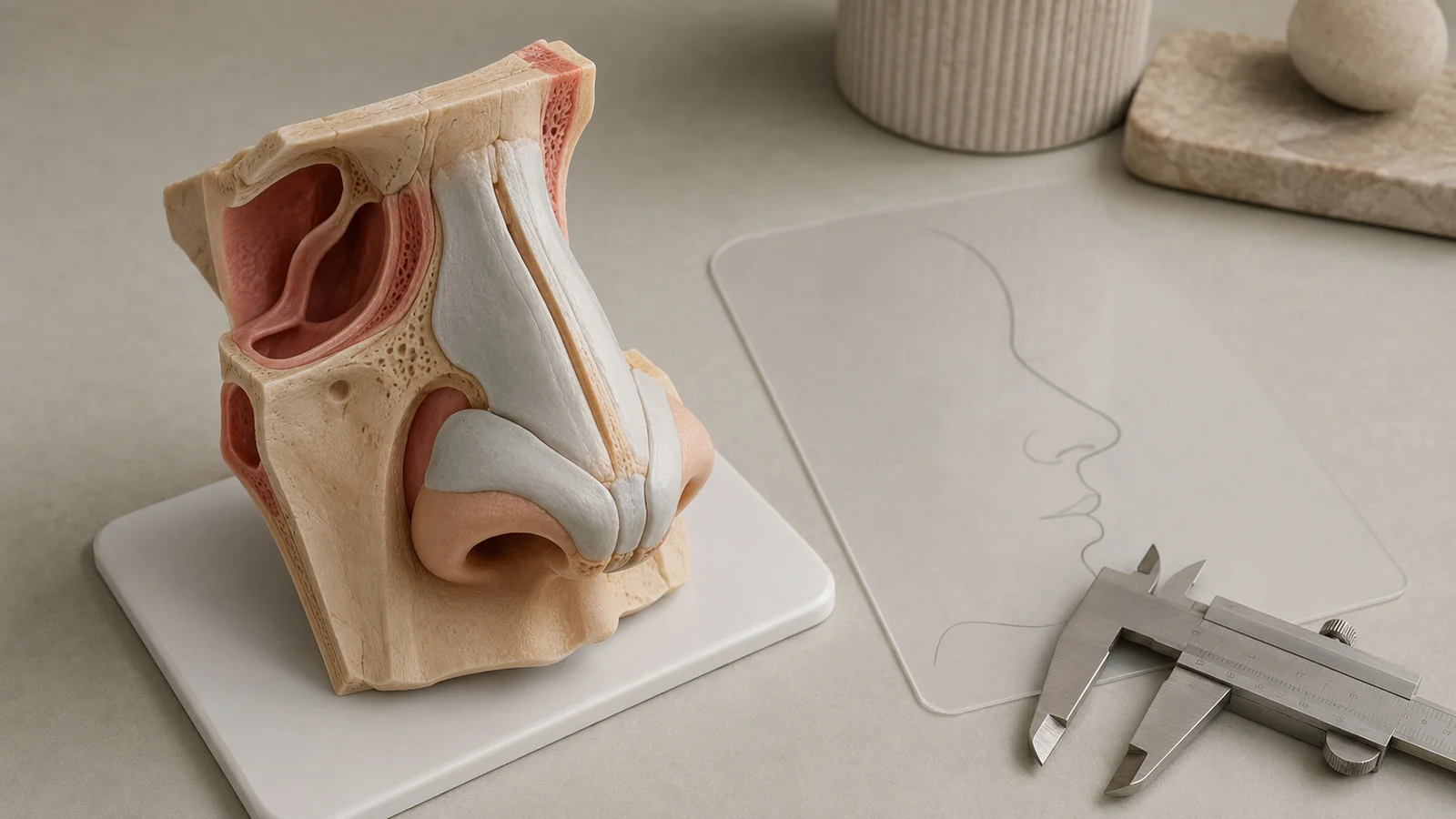
Thin and thick skin can influence how details and swelling appear over time, but neither alone confirms or excludes candidacy. Safe planning aims to balance visible change, stable structure and nasal function.
Skin thickness can also influence planning; see the guide to thick and thin skin in rhinoplasty.
Appearance goals, breathing and facial harmony
Some people ask about a bridge hump, width, tip shape, crookedness or asymmetry. Others also report blockage or difficulty breathing. These concerns may be considered in the same assessment, but they are not the same issue and should not be assumed from appearance alone.
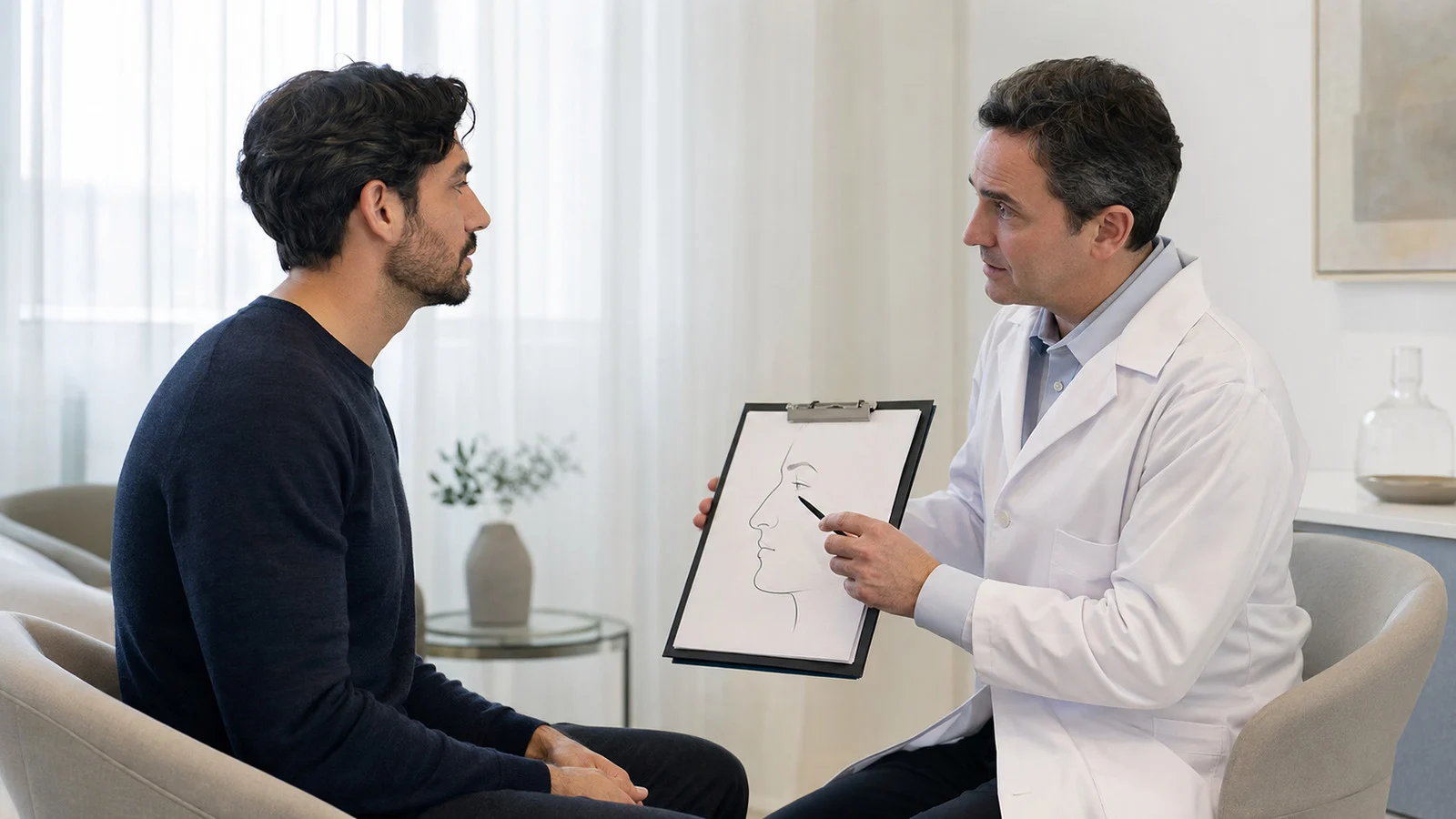
When breathing is also a goal, review the difference between functional and cosmetic rhinoplasty.
A person may be better prepared for consultation when they can explain what concerns them and why, without expecting to copy another person’s nose or dictate a highly exact final shape. Reference photographs can help describe preferences, but they do not guarantee that the same result can be reproduced with different anatomy.
Realistic expectations are central
Realistic expectations mean understanding that results depend on an individual’s healing and structure; swelling evolves over time; and complete symmetry or a universally “ideal nose” cannot be promised. AAFPRS emphasises realistic expectations in its patient information. NHS guidance also describes possible complications and limitations, including persistent breathing difficulty, significant nosebleeds, infection and altered sense of smell.
A useful consultation should discuss:
- Which changes are realistic and which may be limited by anatomy?
- How will the plan aim to protect nasal function?
- How may swelling and appearance change during recovery?
- What risks, uncertainties and follow-up plans should be understood?
- Does the person have enough time to make an informed decision?
What can an online assessment do—and not do?
Sharing preliminary information or standardised photographs can help begin a conversation, identify main questions and arrange a consultation. It does not replace an in-person examination. Skin quality, palpation of structures, a detailed breathing assessment, complete medical history and full facial proportions cannot be established from a photograph or video alone.
Previous injury, nasal blockage, medical conditions and medicines should be discussed during consultation. Final confirmation of suitability and the treatment plan require individual medical assessment.
Information to prepare before consultation
- A list of relevant medicines, supplements, allergies and medical conditions.

- Any history of nasal injury, fracture, surgery or treatment.
- A clear description of appearance and breathing concerns.
- Questions about recovery, activity restrictions, follow-up and risks.
- Unfiltered standard photographs only if the clinical team requests them.
This preparation is not a way to obtain rapid approval. It supports a more accurate and safer discussion.
When might surgery be delayed?
Sometimes the appropriate decision is not to proceed immediately. Incomplete facial growth, uncontrolled health issues, nicotine exposure, active infection, incomplete information or expectations that cannot align with safe surgical limits may require more assessment or a different timeline. Delay does not necessarily mean permanent exclusion; it can be part of responsible care.
Primary and revision rhinoplasty are different discussions
To understand why a second operation can be more complex, read the guide to revision rhinoplasty.
Frequently asked questions
Does age alone decide whether I am suitable for rhinoplasty?
No. Facial development matters, but age alone does not determine suitability. Health, nasal structure, breathing, personal goals and clinical assessment also matter.
Can a photograph confirm that I am a good rhinoplasty candidate?
No. A photograph can be useful for an initial discussion, but it cannot replace examination, medical-history review or functional nasal assessment.
If I smoke or vape, does that automatically mean I cannot have surgery?
Nicotine exposure is an important factor in risk and healing assessment. The appropriate timing and suitability should be decided with the treating team in light of your individual circumstances.
Can rhinoplasty address appearance and breathing at the same time?
For some people, both are discussed during assessment, but they require different evaluation. An examination is needed to determine which goals are realistic and safe.
Can I choose a result identical to someone else’s photograph?
No. Reference images can help communicate preferences, but every face, nose, skin envelope and healing process differs. A result cannot be guaranteed or copied exactly.
Conclusion
A suitable primary rhinoplasty candidate is not simply someone unhappy with the appearance of their nose. Suitability is explored through health, structure, breathing, clear goals and realistic expectations. An in-person examination and review of medical history are essential to a safe decision.
To explore your circumstances, use the website’s verified consultation route. Final recommendations for any procedure should follow an individual examination and medical assessment by a qualified surgeon.
Medical disclaimer
This article is for education and general awareness only. It does not replace an examination, diagnosis or individual medical advice. Suitability, expected outcomes, potential risks and recovery vary according to each person’s health, anatomy and needs. A final decision should be made after assessment by a qualified surgeon.
Suggested sources
- American Academy of Facial Plastic and Reconstructive Surgery (AAFPRS), Nasal Cosmetic Surgery.
- NHS, Nose reshaping (rhinoplasty).
- American Society of Plastic Surgeons (ASPS), Managing the Risks of Smoking in Plastic Surgery Patients.
For initial questions, use the verified consultation channel on the website.
For more information about the consultation pathway and relevant services, see Dr. Masoud Rastkari’s service information.



[…] as a plan that can simply be copied. For a broader overview of first-time surgery assessment, read Who Is a Good Candidate for Primary Rhinoplasty?. The access route is a separate question. For discussion of tissue changes after prior surgery, see […]
[…] a closer look at suitability and the first assessment, read Who Is a Good Candidate for Primary Rhinoplasty?. If you have had a previous operation, Why Is Revision Rhinoplasty More Complex? explains why […]
[…] For a broader review of candidacy and expectations, see the primary rhinoplasty candidacy guide. […]
[…] a broader look at suitability and assessment, read Who Is a Good Candidate for Primary Rhinoplasty?. If you have had a previous operation, see Why Is Revision Rhinoplasty More Complex?. The […]
[…] ve değerlendirme hakkında daha geniş bilgi için İngilizce Who Is a Good Candidate for Primary Rhinoplasty? rehberini okuyabilirsiniz. Daha önce burun ameliyatı geçirdiyseniz İngilizce Why Is Revision […]
[…] المزيد عن الملاءمة والتقييم، اقرأ الدليل الإنجليزي Who Is a Good Candidate for Primary Rhinoplasty?. وإذا سبق لك إجراء عملية للأنف، فراجع المقال الإنجليزي […]