Natural rhinoplasty generally describes a change designed to suit the individual face without an excessively small or upturned appearance. It is an aesthetic preference rather than a standard surgical technique, and what looks natural will differ from one person to another.
This guide explains commonly used style labels, facial balance, breathing, swelling, and questions to ask before deciding on surgery. An online article cannot determine which procedure is appropriate for you.
Contact the clinic on WhatsApp to discuss your goals.
Fill out the consultation form or send a message on WhatsApp so we can determine the right path for your surgery or facial rejuvenation.
Request ConsultationWhat do the three style labels mean?
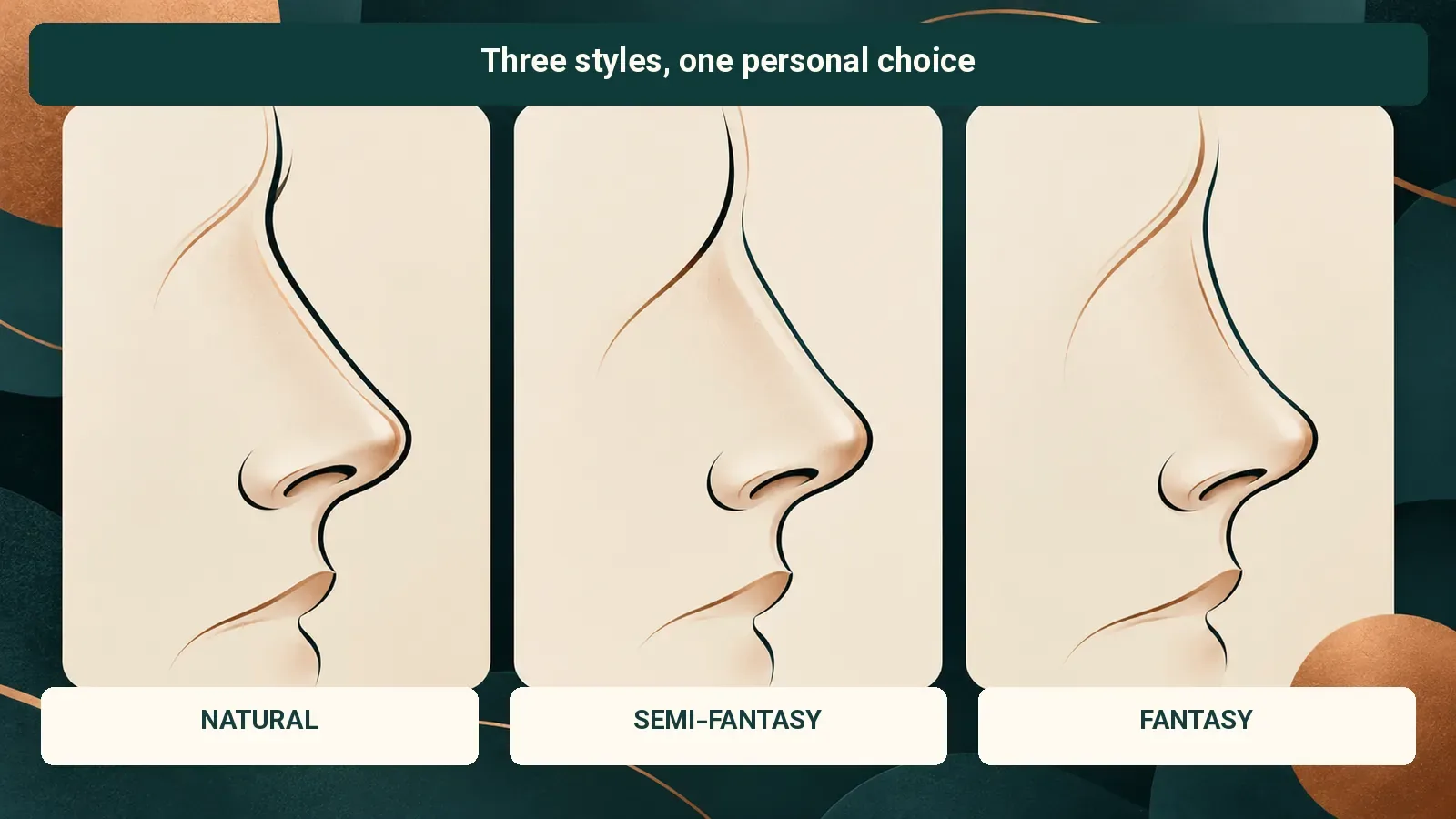
These are informal descriptions rather than medically defined categories. Ask your surgeon to explain the actual proposed changes instead of relying on a label.
Natural
A natural preference usually means refinement of the bridge or tip while retaining facial harmony. The bridge can be straight or gently curved, and tip position is individual. Natural does not mean unchanged or guarantee that nobody will notice surgery.
Semi-fantasy
In some markets this describes a look between natural and fantasy, often with a slightly more noticeable curve or tip rotation. The label has no universal boundary; show examples and explain which details appeal to you.
Fantasy
This commonly describes a more pronounced curve and a more upturned tip. Such changes may not fit every face or nasal structure. Removing or narrowing too much can compromise support and breathing; a safe proposal requires examination.
Comparing the looks
| Feature | Natural | Semi-fantasy | Fantasy |
| Bridge | Usually straight or gently curved | Often a more visible curve | Often a more pronounced curve |
| Tip | Individual position suited to the face | May involve greater rotation | Often a more upturned preference |
| Swelling | Depends on skin, procedure and healing | Depends on skin, procedure and healing | Depends on skin, procedure and healing |
The table describes popular usage rather than fixed degrees or results. The style name alone does not predict healing time.
Choosing a look that fits your face
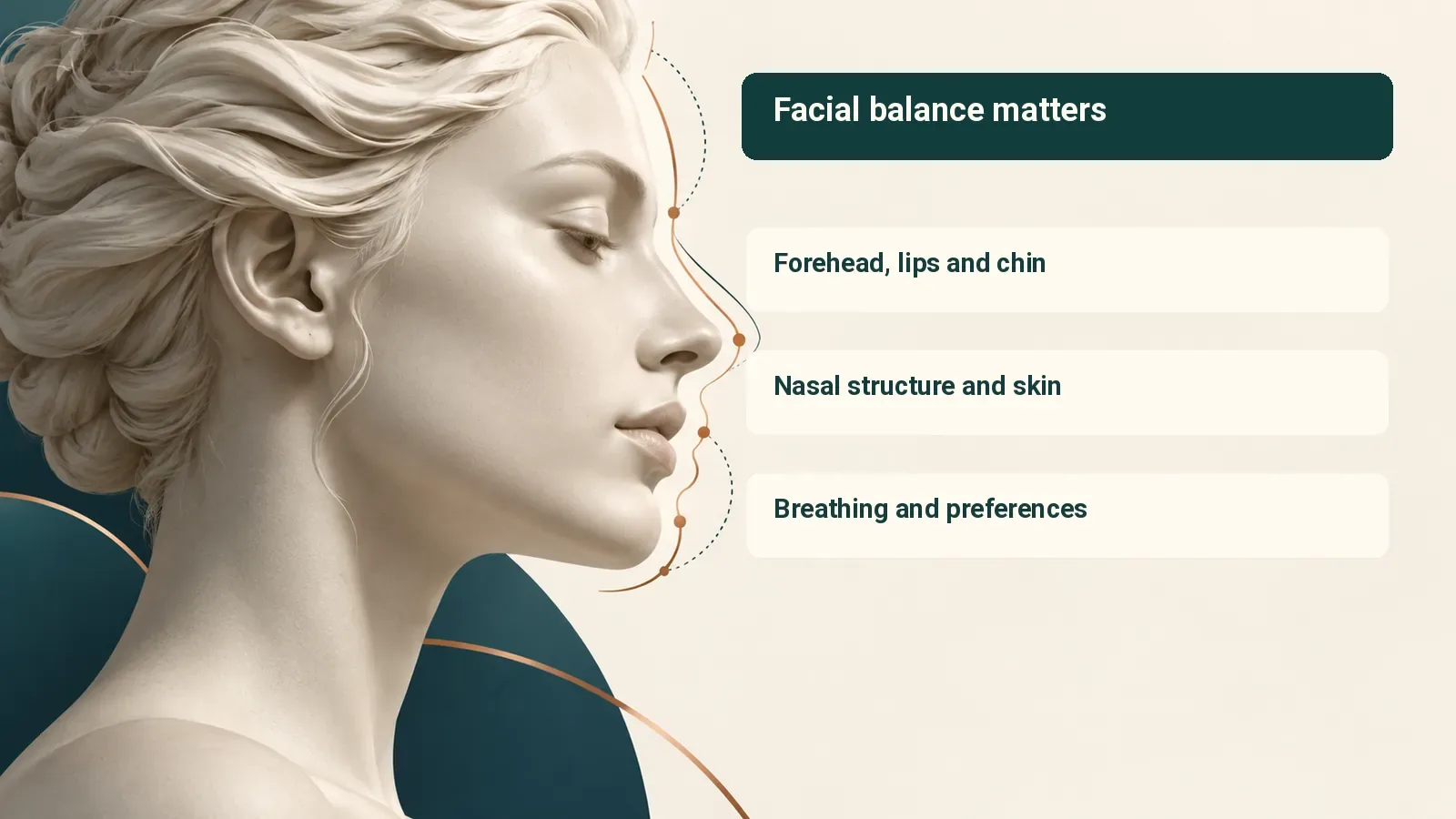
Forehead, lips and chin
The nose relates to the forehead, lips, chin and overall face. Assessment from the front and profile can reveal different priorities. Bring reference photos to discuss a bridge, tip or nostril shape, not to demand an identical copy of someone else’s face.
Skin, support and breathing
Skin thickness, cartilage strength, bones, prior injury or surgery and the nasal airway influence the options. Thicker skin can conceal fine structural definition and swelling may last longer. Breathing deserves assessment alongside appearance. Learn more on the clinic’s rhinoplasty information page.
Natural results for women and men
There is no single female or male nose shape that everyone should choose. People have diverse facial features, identities and preferences. Discuss the proportions and degree of change that suit you rather than relying on a fixed angle or gender stereotype.
Ask the clinic about an individual consultation.
Will a natural nose tip droop later?
Appearance can evolve as swelling settles, tissues heal and the face ages. A concern about tip position requires individual assessment; an early result is not a final outcome. No technique or style guarantees that the nose will never change. Report a concerning change or new breathing difficulty to your clinician.
Swelling and seeing the result
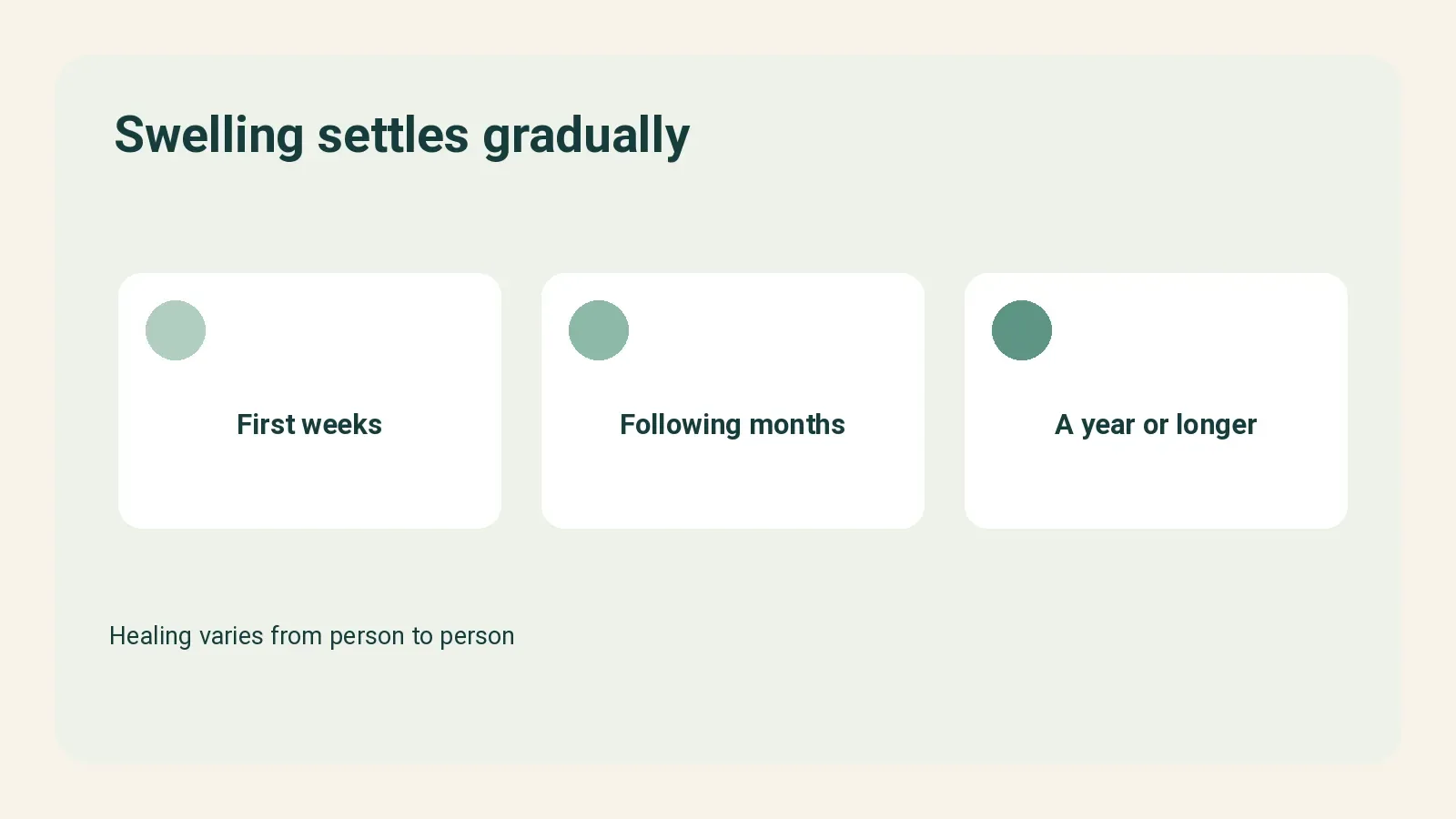
Much early swelling improves over the first weeks, while refinement continues over months and may take a year or longer. Skin thickness, the procedure and individual healing matter more than the name of the style. Follow your surgeon’s instructions on medication, activity and follow-up; do not start massage or injections on your own. See the week-by-week recovery guide for general stages.
How to assess before-and-after photos
Request real patient examples shared with consent. Compare similar views, lighting and camera distance, and ask how long after surgery the later photo was taken. Filters or retouching can mislead. A similar-looking patient is not a guarantee of a similar result. Illustrations in this article are conceptual, not actual patient outcomes.
Questions for your consultation
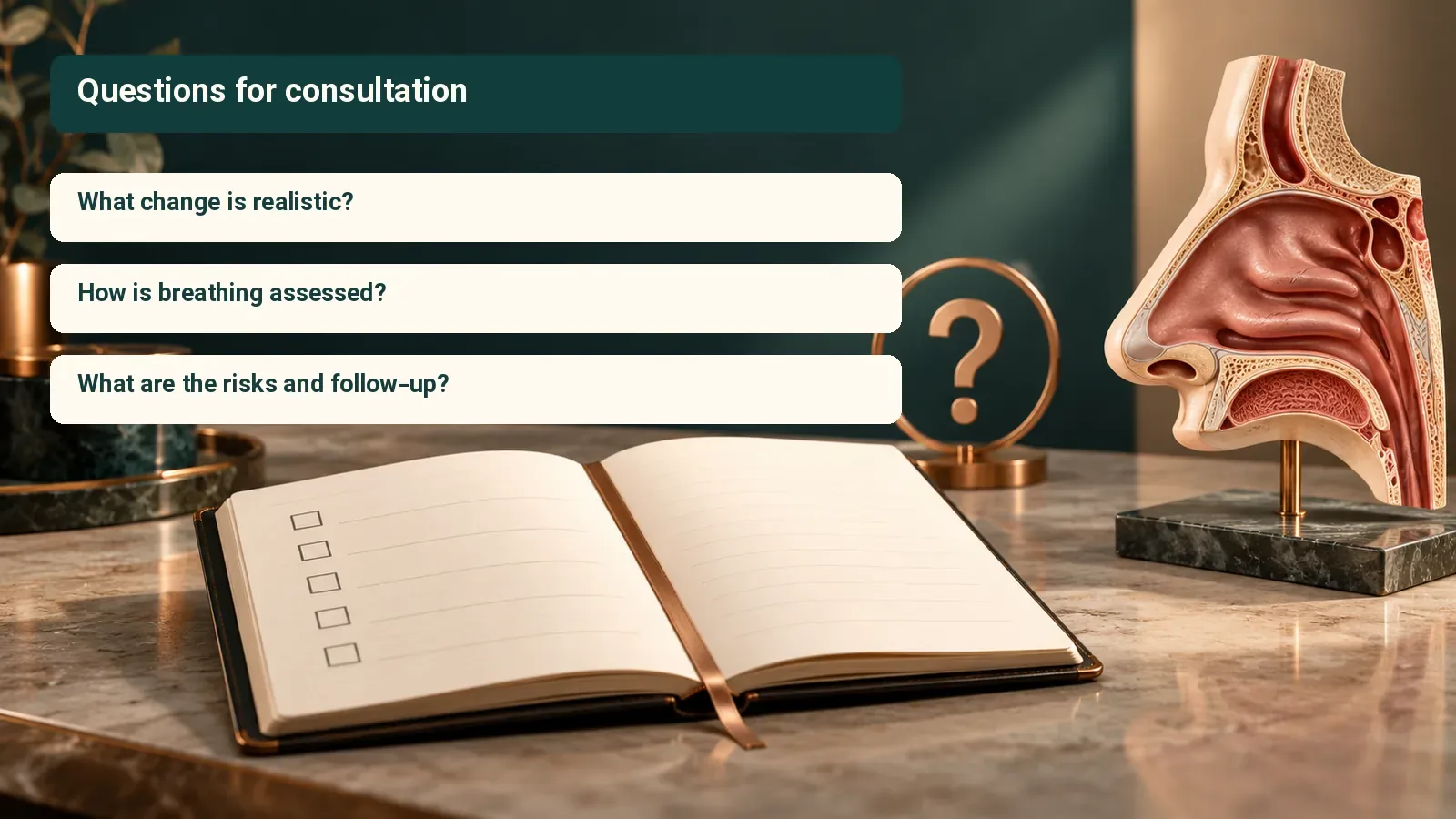
Ask what changes are realistic from the front and side, how your breathing will be evaluated, what risks and alternatives exist, and who will manage follow-up or complications. Risks can include bleeding, infection, breathing problems, dissatisfaction and possible revision surgery. Ask what happens if the surgeon considers surgery unsuitable. The online consultation guide explains how to prepare; an online discussion does not replace examination.
Frequently asked questions
Can natural rhinoplasty be considered for thick skin?
Yes. What is achievable depends on the skin, supporting structure, airway and individual examination.
Must a natural bridge be perfectly straight?
No. The desired contour depends on facial balance and personal preference.
Does semi-fantasy surgery cause more swelling?
The style label alone does not determine swelling; skin, procedure and individual healing matter.
When is the final shape visible?
Refinement is gradual and can take a year or longer. Your clinician can assess your individual progress.
Does a natural result prevent tip drooping?
No style guarantees no future change. Anatomy, surgical support, healing and ageing all matter.
Can a reference photo guarantee my result?
No. It helps communicate preferences but cannot predict an identical outcome.
Conclusion
Describe the details you like and do not like, disclose any breathing concerns and agree on realistic goals after examination. Consider the risks and alternatives before deciding.
Contact the clinic on WhatsApp to arrange a consultation.
This educational article does not replace individual medical advice.